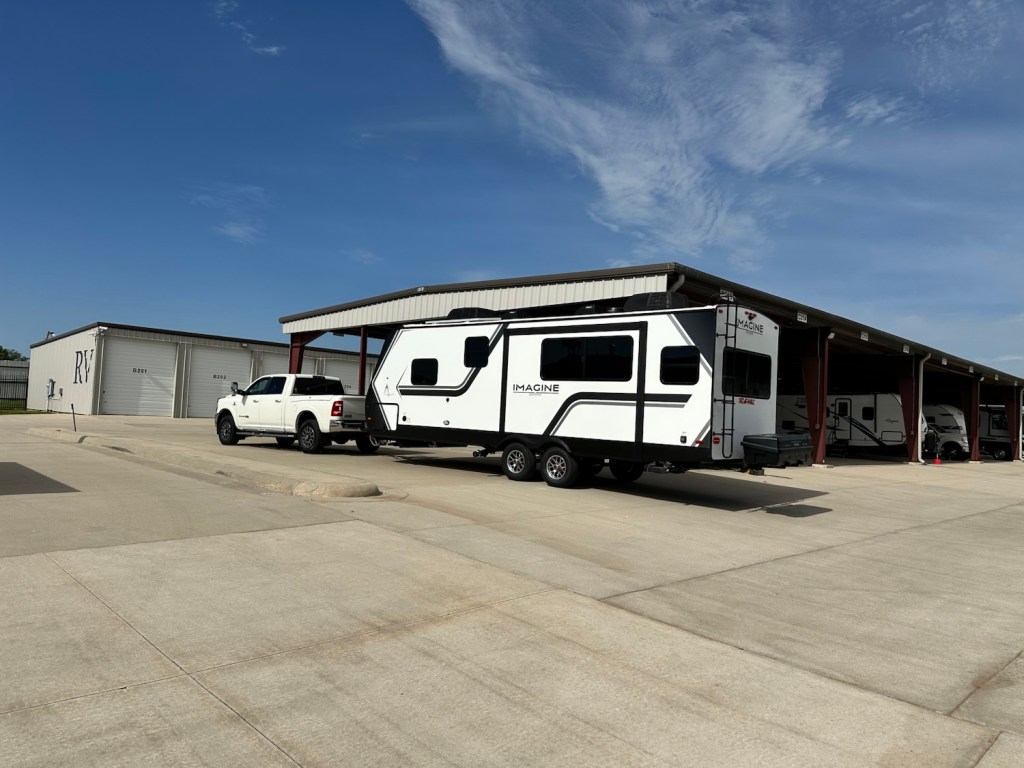
We have made it to the shores of Lake Powell in scenic Arizona, very near the Arizona-Utah line. The lake is magnificent, dwarfing our Lake of the Ozarks, offering 186 miles of shoreline, 25 miles wide at its widest point and an average depth of 132’. We are in Navajo Indian country and for the first time in my life, I understand why the Indians were so mean. It is the heat, described as “dry heat”, whatever in hell that means. Our tour is the elimination tour and we chose to experience Arizona in the hottest time of the year. We have eliminated Arizona, at least in the arid lowlands. If you get to 7,000’, say in Flagstaff, the weather moderates considerably, apparently the Indians didn’t figure this out. As a point of reference, most folks around here have no idea what “humidity” even is. The climate accounts for the orneriness of the abundant rattlesnakes and scorpions….there are signs everywhere to not pet the snakes. One last point, a 20 MPH wind is described locally as a breeze.
In a strange sort of way, the place is beautiful, well except for the proliferation of old trailer houses where your wealth is showcased by how many tires are on the roof. I suspect the affluent folks choose radials as opposed to bias ply truck tires, which are likely too heavy to hoist onto your roof anyhow. We have scored wonderful parks to set up the Taz M-Haul, especially the one we are in now named Antelope Point. It is paved, with Astro-turf to set your chairs and grill on, level and filled with RV’s ranging from our modified hillbilly rig to 500,000+ coaches. The park is adjacent to a huge marina, run by the Navajo Nation. Half of the population of rural Arizona is here for the weekend, with houseboats and top tier ski boats everywhere. My logistics officer, Sharon, is a meticulous planner, landing us in places like a secluded but a very nice place named Homolovi, which the Mormons chose to build a settlement on but got the hell out of there after a summer or two. The sign there suggested they had great difficulty raising crops (it is on the banks of the little Colorado river…..a ditch to a Missourian). No kidding!
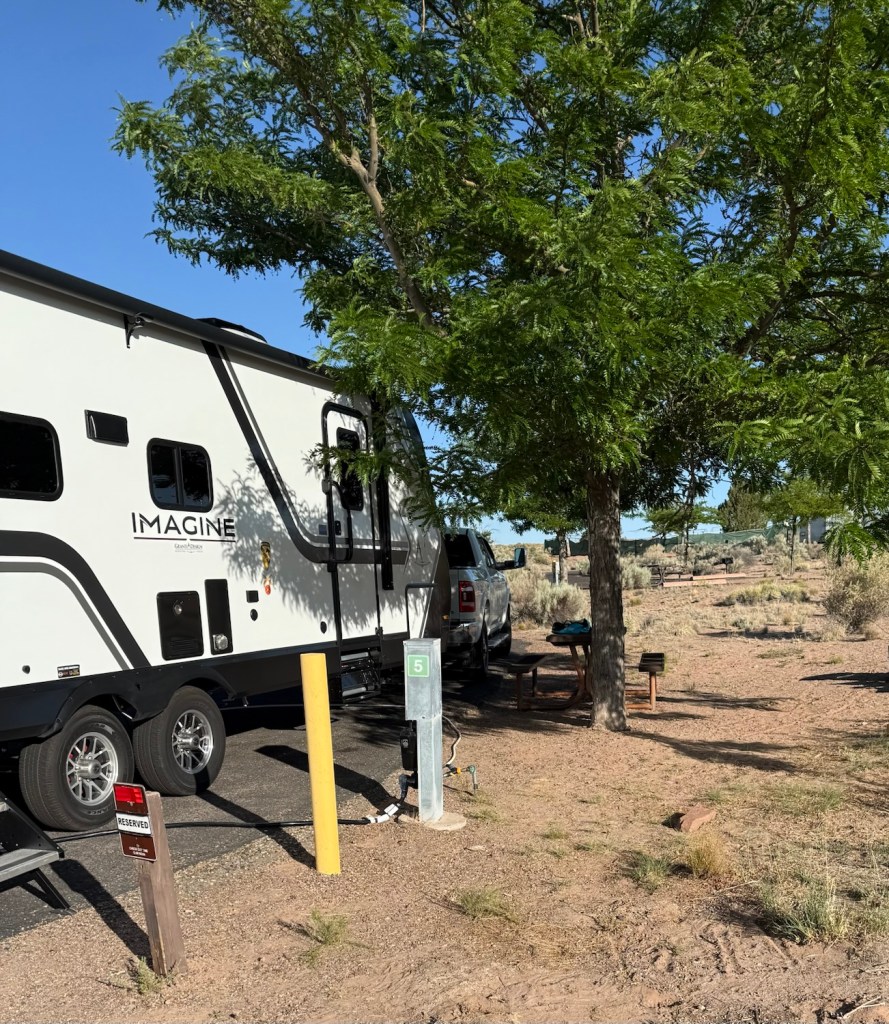
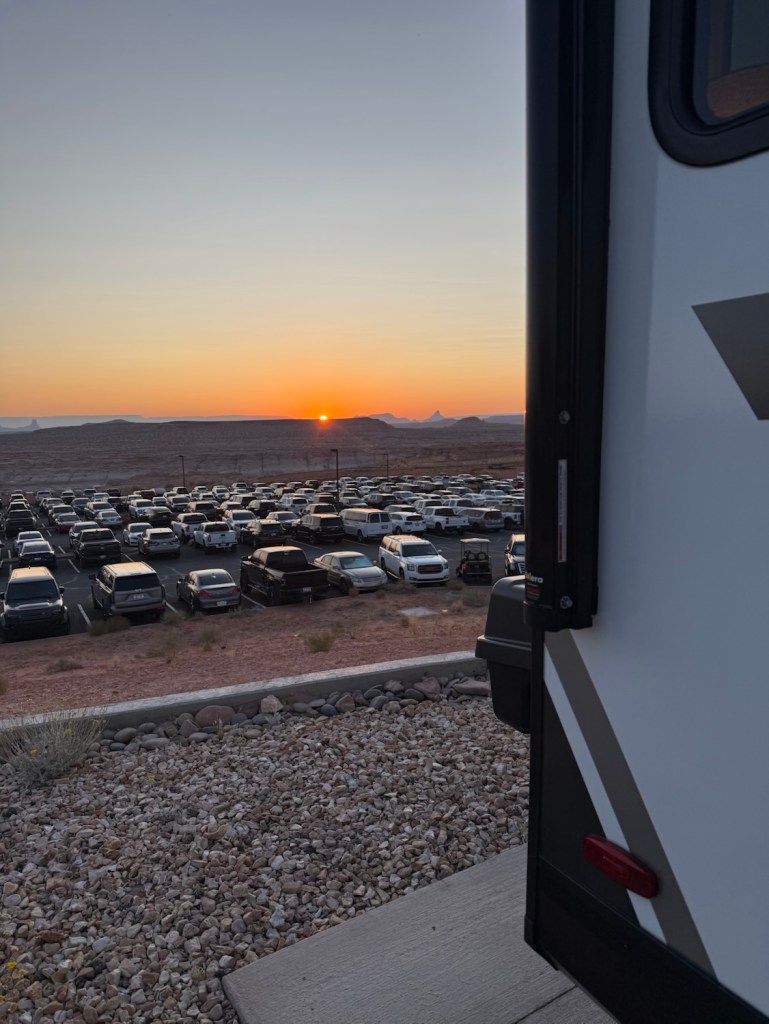


We are here for an extended stay as it is close to the Grand Canyon and a dozen other national treasures, which you can drive to or boat around. We probably won’t see much on a boat tour, as I am insisting we go at night or dawn, lest you become mummified in the heat. I am including several photos to illustrate our journey so far. As a final point, I found myself in the wrong lane entering the park, as the sign telling you which lane to be in was about the size of a paper plate and placed well beyond the point you could make an adjustment. A native lady manned the booth and was not in a good mood, probably because her restroom facility was a porti-potty that smelled like death from 100’ away. She chastised us and I responded by suggesting that whoever placed the sign was somewhat mentally challenged. She was irritated and I can become irritated right back at ‘ya. I cut her some slack though, as I have a First Calvary decal on the RV and I am sure she has relatives who took umbrage at anything related to Calvary!
have a great week!
SR