
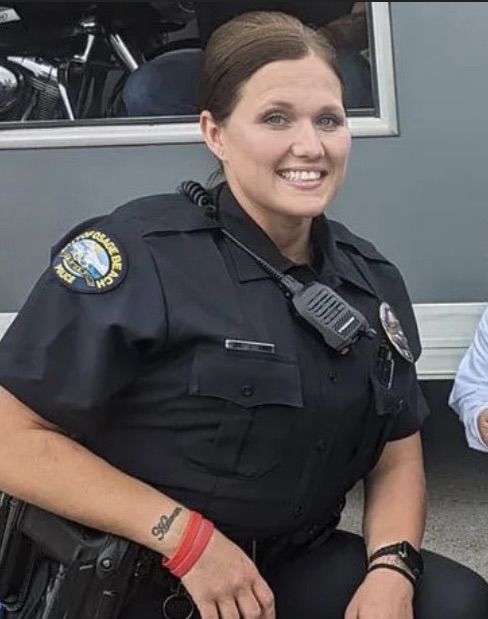
This week the law enforcement community buried a vibrant, young member of their fraternity, Phylicia Carson, 33. She died in a police pursuit, often referred to by LEO’s as a “chase”. In August of 2015, my agency, the Missouri State Highway Patrol, lost a fine young officer, Tpr. James Bava in eerily similar circumstances . I write today in their memory.

English common law is the genesis of modern police policy related to pursuits. The law stated that officers were under no obligation to suspend the pursuit of a criminal simply because of resistance or threatened resistance. Before I talk about the practicalities of pursuits, numbers must come into play. In a study by the Police Executive Research Forum, it was recommended pursuits be limited to two circumstances:
1. A violent crime has already occurred or
2. There is an immediate risk the suspect will commit another crime.
Great stuff, if the offender has a placard on their vehicle announcing why he/she is running. The fact is, we don’t have any idea why the offender is running in the majority of cases.
A study of pursuits between 2009-2013 revealed that for every 100 pursuits 2 severe and 10 minor injuries occured, with the suspects injured 76% of the time and the officers less than 3% of the time. Non-involved people account for the remaining injuries and deaths. In 2020, fatal crashes in pursuits peaked at 455, the highest number since 2007 when 372 folks died. In plain language, a person is killed every day, on average in a police pursuit, with an officer killed every 11 weeks. The average age of the offender is 26 and usually a male. As you read, it is important to remember that officers initiate arrests and offenders initiate pursuits.
These numbers indicate a continuing problem for police executives who over the past decade have initiated a number of pursuit policies designed to reduce the carnage, from severely restrictive to somewhat reasonable, all of which favor the offenders. These policies fail to account for the adrenaline dump that occurs when an officer begins pursuing a violator. Officers do not take kindly to resisting arrest, and pursuits are a heightened form of this crime. Policies must, as expected, be tailored to the environment, rural or urban. It is safe to assume that pursuits have been around since the beginning of policing, on foot, on horseback and now in vehicles. Officers are expected to curb the overwhelming desire to catch a fleeing violator, ignore the tremendous adrenaline rush that accompanies these events, and respond to department policy. This kind of response is counter to every instinct officers on the streets have, and I speak from experience. Speaking of experience, those of us who were and are in this business know the pursuit of big block motorcycles presents a particular danger, often at exorbitant speeds, and are deserving of a separate writing of their own.
Like a greyhound on the track after the mechanical rabbit, when folks run, officers are going to pursue them and sort out the reasons they ran when the chase is over. The considerations mentioned above place the officer in an extremely perplexing position. Despite various strategies from stop sticks to pit maneuvers, police officers are expected to “run violators to ground”. It is what we do. Chases are a part of the business and may God richly bless the officers now, before us and in the future that protect our world by pursuing and catching violators of every stripe. Officers like Phylicia Carson and James Bava were doing precisely what was expected and fate intervened. We have all been there and are very fortunate to be alive, having escaped their fate by mere inches or a mile an hour or so. Chases are extremely dangerous and often deadly, considerations that officers clearly understand.
It is our business.
Have a great week!
SR
 srj641
Very nice article. Thank you for your service and thank you for remembering those that gave it all.
Jim Bava
Father of MSHP Trooper James M. Bava EOW 8/28/2015
LikeLiked by 1 person
You are most welcome.
LikeLike